
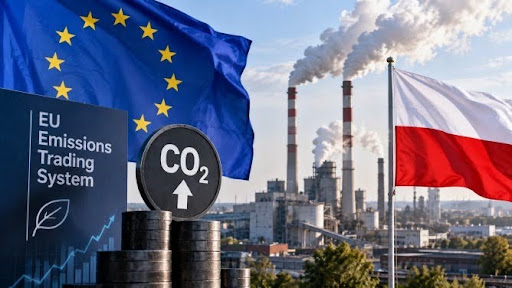
Polish businesses are feeling the squeeze from the rising expenses associated with the European Union’s Emissions Trading System (ETS), sparking worries about the competitiveness of the nation’s industrial sector. Representatives from the energy sector highlight that the costs linked to ETS can constitute up to half of the electricity prices for some industrial consumers in Poland. This figure starkly contrasts with the EU’s average, which hovers around 11%.
Poland’s officials argue that the country is navigating a particularly challenging energy transition. Historically reliant on one of Europe’s largest coal-dependent power infrastructures, Poland is now striving to pivot towards cleaner energy sources. In light of these challenges, Polish authorities are advocating for modifications that would alleviate the financial burden of ETS costs, while still allowing the nation to pursue its emissions reduction goals.
In recent years, Poland has made significant strides in expanding its renewable energy capabilities, including advancements in energy storage, offshore wind, and nuclear power. Notably, in July, renewable energy sources constituted 41.6% of Poland’s electricity mix. This achievement marked a significant milestone, as renewable energy generation surpassed that of coal-fired power for the first time in the country’s history.
Furthermore, Poland has actively worked to reduce its reliance on Russian gas by diversifying its energy supplies. This strategic shift includes increased imports of liquefied natural gas (LNG) and the utilization of the Baltic Pipe. Polish officials emphasize that while the country is committed to advancing its energy transition, they seek more flexibility and adequate time to safeguard industrial and economic competitiveness.
Authorities are also advocating for sustained investment in new power-generation facilities, enhanced electricity grids, improved energy storage solutions, and overall system flexibility. These efforts aim to ensure that Poland can maintain its momentum towards a greener energy future without compromising its industrial strength or economic stability.