
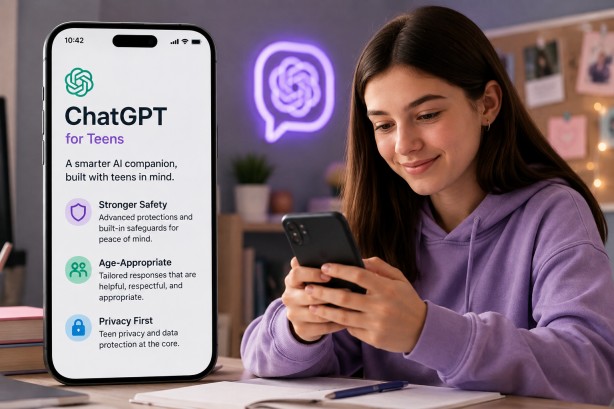
OpenAI has unveiled a new version of its ChatGPT platform, specifically tailored for teenagers aged 13 to 17. This teen-centric version incorporates enhanced safety measures and protections suitable for younger users. It aims to create a secure space for teenagers who use AI for educational purposes, everyday inquiries, and social interaction by limiting content related to sensitive topics like self-harm, suicide, and sexual or romantic discussions.
In an effort to foster healthy AI usage, the revised ChatGPT includes several features designed to support the well-being of its young users. One such feature allows parents to link their accounts and establish “quiet hours,” during which their children cannot access the platform. Additionally, in certain high-risk scenarios, parents may receive safety alerts, enhancing their ability to monitor their teen’s interaction with the AI.
Further safeguarding measures have been implemented by OpenAI to address sensitive issues such as eating disorders, aiming to minimize potentially harmful content and guide users towards offline support when necessary. The platform is also programmed to prevent the development of unhealthy emotional attachments between teenagers and the AI by ensuring the chatbot does not imply it possesses personal feelings, consciousness, or emotions toward users.
This teen-focused version of ChatGPT employs age-assurance technology to estimate whether a user is under the age of 18. This estimation is based on various factors, including user interaction patterns with the service. Minors identified through this process are automatically directed to this specially designed version, which includes additional protections to ensure their safety and security online.
For educational purposes, ChatGPT for Teens is crafted to promote comprehension and problem-solving skills rather than simply providing direct answers or completing tasks on behalf of students. This approach aims to position AI as a supplementary study tool, encouraging learning and understanding rather than replacing traditional educational methods.