
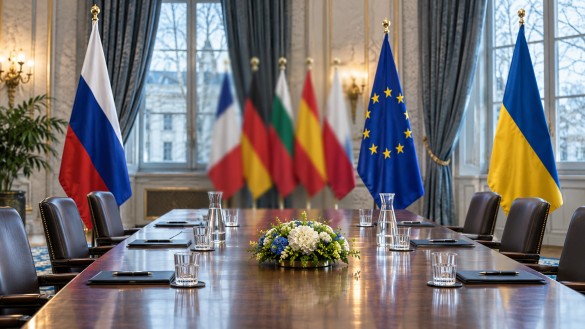
In a significant move aimed at facilitating peace negotiations between Russia and Ukraine, European leaders have decided to assemble a negotiating team comprising major European nations and EU institutions. Confirmed by European Council President António Costa after an informal EU leaders’ meeting in Dublin on November 13, this team includes representatives from France, Germany, Italy, Poland, and the United Kingdom.
Although national security advisers from these countries and EU institutions will engage in technical-level discussions, political leaders to directly represent Europe have not yet been appointed. Costa underscored the importance of a unified European stance on Ukraine’s future and security, while emphasizing that decisions on Ukraine’s territorial and sovereign matters must rest with the Ukrainian government.
The European team is tasked with addressing crucial issues such as security guarantees for Ukraine, its post-war reconstruction, and its future relationship with the EU. European leaders have reiterated the need for continued support for Kyiv and intensified pressure on Moscow to foster a peaceful resolution. However, the Kremlin’s acceptance of Europe’s role in the negotiations remains uncertain, as Russia seeks clarification on Europe’s intentions and commitment to the peace process.
One of the contentious points involves Europe’s broader security arrangements, with Russia pushing to reopen discussions on NATO’s military presence in Eastern Europe, specifically targeting nations that joined the alliance post-1997. German Chancellor Friedrich Merz has opposed this demand, maintaining that Europe’s current security framework is already established.
The involvement of EU foreign policy chief Kaja Kallas in the negotiations is still unclear, despite her assertion that European foreign and security policy should be represented. European Commission President Ursula von der Leyen has reaffirmed the necessity of ongoing support for Ukraine and consistent pressure on Russia as essential elements for achieving lasting peace.
Despite these diplomatic efforts, which also include the United States alongside Russia, Ukraine, and European leaders, significant disagreements persist, with Russia showing little willingness to compromise on its key demands.