
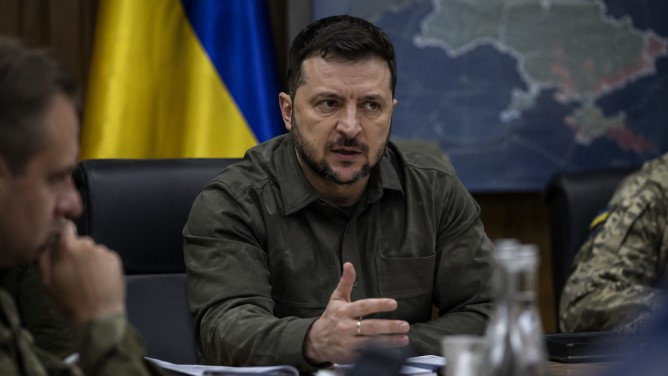
As international focus is drawn to the US midterm elections, Ukrainian President Volodymyr Zelensky has issued a stark warning about potential large-scale Russian attacks on Ukraine’s energy and logistics infrastructure. In his November 2 address, Zelensky highlighted intelligence reports indicating preparations for renewed Russian strikes, underscoring a critical shortage of air defense interceptors, such as Patriot missiles, as winter approaches.
Amid these growing tensions, a tragic Russian strike on a school in Komyshuvakha, Zaporizhzhia region, left at least 26 people dead, including emergency workers and police officers. The school, which was being used for humanitarian aid distribution and civilian shelter, became the latest casualty in the ongoing conflict. This attack followed the conclusion of a six-day humanitarian ceasefire in the Kherson region, which ended on November 1. While the temporary truce allowed for civilian evacuations from the Russian-occupied city of Oleshky, attempts to extend it were unsuccessful.
Despite the escalating violence, diplomatic channels remain open. Ukrainian, Russian, and US officials are set to engage in US-mediated peace negotiations in Abu Dhabi on November 10-11. These discussions aim to address de-escalation, humanitarian assistance, and post-war security arrangements, offering a glimmer of hope amid the hostilities.
Zelensky has accused Russia of stepping up attacks on Ukraine’s electricity distribution networks, complicating repair efforts. While energy workers strive to restore services, the protection of critical infrastructure remains a top priority for Ukraine as the winter season looms.
In a broader call to action, Zelensky urged the United States and its allies to amplify pressure on Moscow by targeting the revenues from Russian oil and gas. As the conflict persists, such economic strategies are seen as vital to countering Russia’s aggressive maneuvers.