
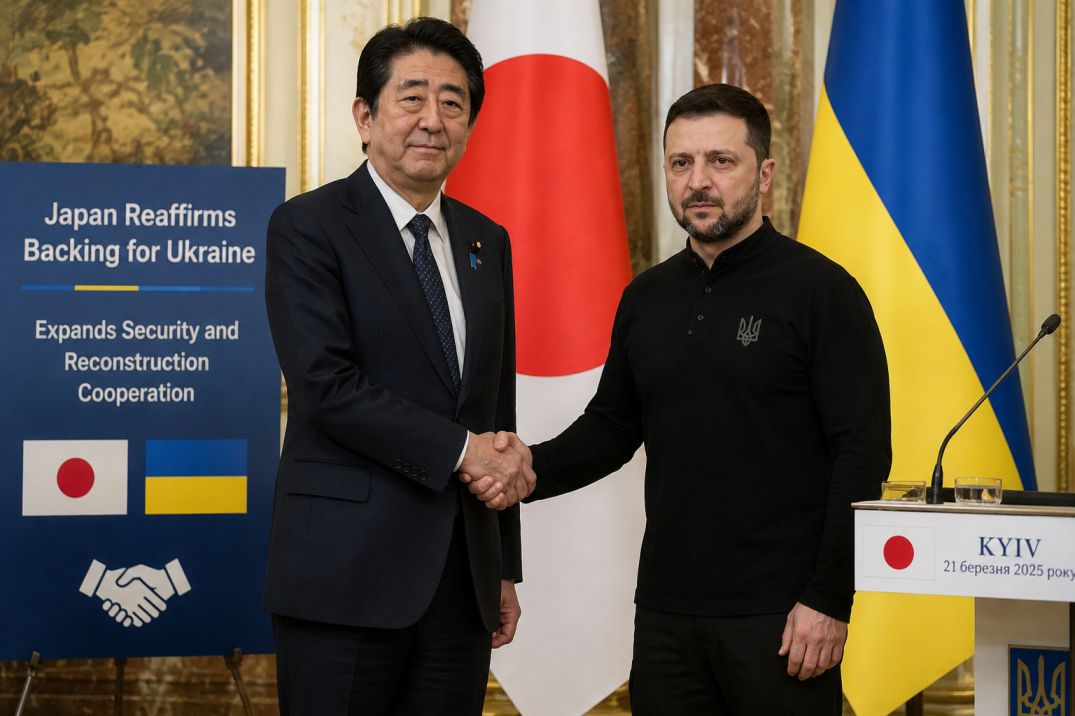
In a demonstration of mutual commitment to deepening their bilateral relationship, Japan and Ukraine have agreed to enhance their cooperation, particularly in the realms of security and long-term recovery efforts for Ukraine. In a meeting held in Tokyo on July 1, Japanese Foreign Minister Toshimitsu Motegi reiterated Japan’s unwavering support for Ukraine to his Ukrainian counterpart, Andrii Sybiha. This dialogue underscored the shared resolve of both nations to tackle regional security issues and bolster strategic collaboration.
Following their discussions, Motegi emphasized Japan’s continued provision of political, humanitarian, and financial aid to Ukraine, alongside maintaining sanctions on Russia. A significant highlight of Japan’s support includes its commitment to aiding in the restoration of the Kyiv Pechersk Lavra monastery complex, a UNESCO World Heritage Site that suffered damage from Russian military actions. Sybiha expressed his appreciation for the ongoing partnership with Japan, voicing confidence in Japan’s role as a crucial ally throughout the current conflict and in future rebuilding efforts.
The meeting also served to spotlight the increasingly interconnected security concerns between Europe and the Indo-Pacific region. Sybiha pointed out the shared perspective of Japan and Ukraine on the security of their regions, citing concerns over the expanding military cooperation between Russia and North Korea. Both parties agreed on the necessity of reinforcing collaboration in response to the shifting geopolitical and security landscape that threatens global stability.
Japan’s commitment to Ukraine since the onset of the conflict has been substantial, with pledges amounting to approximately $20 billion. Japan’s support has been diverse, including providing generators to restore electricity during winter months, equipment for humanitarian demining, and non-lethal defense supplies like surplus bulletproof vests. Additionally, Japan has enhanced its security contributions by dedicating approximately 2.2 billion yen to NATO’s Prioritized Ukraine Requirements List for defense equipment procurement. The deployment of four Self-Defense Forces personnel to NATO’s Security Assistance and Training mission in Germany also signals Japan’s intent to gain modern warfare experience.
Despite shifting global priorities, Japanese officials have affirmed that their dedication to Ukraine remains steadfast. Since Russia’s full-scale invasion, Japan has progressively extended its diplomatic, humanitarian, and security engagement with Ukraine, alongside supporting future reconstruction planning. High-level exchanges, including visits by senior Japanese officials to Kyiv, reflect Tokyo’s commitment to playing a proactive role in Ukraine’s recovery and fostering long-term regional and global security.