
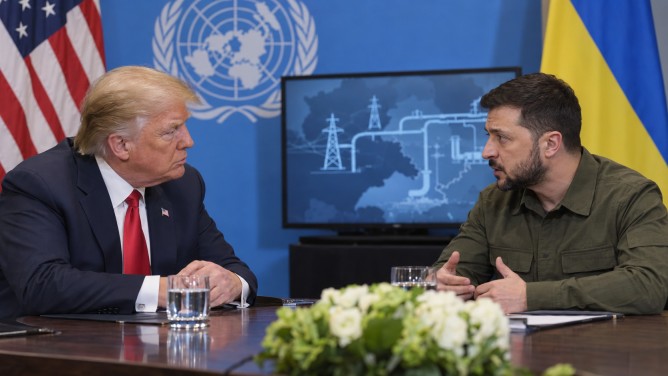
The ongoing conflict between Russia and Ukraine has been a focal point at the United Nations General Assembly this week, with global energy supply concerns taking center stage. As Ukrainian President Volodymyr Zelenskyy and U.S. President Donald Trump prepare to meet in New York, the issue of energy infrastructure attacks has become a pressing matter. Over the recent weekend, Ukrainian forces intensified their offensive with a significant strike on the Moscow region, targeting a large oil refinery, which reportedly resulted in three fatalities.
President Trump has expressed concerns over these attacks on Russian refineries, highlighting their impact on global energy shortages. He has called for a ceasefire in the energy sector as a step towards resolving the broader Russia-Ukraine conflict, which he asserts is disrupting energy supplies worldwide. This sentiment aligns with Trump’s previous appeals to Zelenskyy to refrain from targeting Russian diesel and fuel infrastructure.
Despite Trump’s earlier announcement of an energy ceasefire agreement between Russia and Ukraine, no formal arrangement has been reached, and hostilities continue. Russian attacks on Ukrainian energy facilities and other critical infrastructure remain ongoing, adding complexity to the negotiations. Zelenskyy has indicated that discussions are underway to de-escalate tensions, with proposals being considered to halt attacks on Ukraine’s energy facilities and critical infrastructure.
During a phone conversation on Sunday, Trump and Zelenskyy revisited these issues, emphasizing the need for a peaceful resolution to protect energy resources. Zelenskyy has stated that Ukraine is prepared to implement reciprocal measures if Russia ceases its targeting of Ukraine’s energy infrastructure and food exports.
As Trump is set to address the UN General Assembly, his agenda includes several meetings focused on the global energy situation and efforts to mediate ongoing international conflicts. The outcomes of these discussions could have significant implications for the future of energy security and geopolitical stability in the region.