
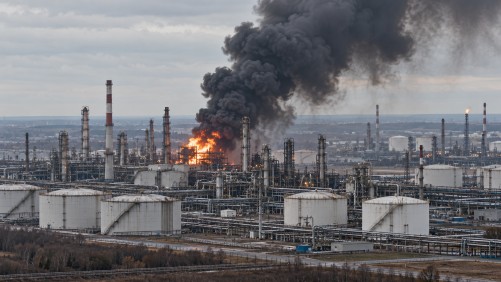
Ukraine continues to target Russian oil infrastructure, intensifying a campaign that has drawn criticism from former U.S. President Donald Trump. Trump has called on Ukrainian President Volodymyr Zelenskyy to cease attacks on Russian refineries, arguing that these actions are exacerbating global diesel supply disruptions and contributing to rising fuel prices.
According to Zelenskyy, Ukraine recently struck an oil facility in Russia’s Samara region and reported attacks on a Russian vessel in the Black Sea, as well as a facility linked to attack drones in the Oryol region. Despite Trump’s assertions, energy analysts point out that the ongoing conflict in Iran plays a significant role in disrupting global oil markets, affecting fuel prices worldwide.
The Ukrainian strikes have reportedly impacted a considerable portion of Russia’s refining capacity, leading to fuel shortages and rationing in some areas of Russia. In response, Russia has extended restrictions on diesel exports, which adds further strain on international fuel supplies. Zelenskyy has expressed willingness to support an energy ceasefire with Russia, but Moscow has shown little interest in halting its assaults on Ukrainian infrastructure.
Russian President Vladimir Putin has dismissed proposals that would link an end to Russian strikes on Ukrainian facilities with a cessation of Ukrainian attacks on Russian oil targets. Meanwhile, Russia persists in launching missile and drone attacks across Ukraine, focusing on energy infrastructure and other critical sites.
Ukrainian authorities have raised concerns that the continued Russian strikes could exacerbate challenges with electricity and heating supplies as the winter season approaches. The ongoing conflict between the two nations highlights the complexities in finding a resolution that addresses both military and energy-related tensions.