
When the Supreme Court ruled 6-3 that President Trump had exceeded his authority in imposing tariffs under the IEEPA, few anticipated that within 24 hours the president would not only maintain those tariffs but raise them. That is precisely what happened when Trump announced a new 15% tariff on all imports, citing a previously dormant provision of the 1974 Trade Act as his legal basis.
The move illustrated Trump’s central approach to governance: when one door closes, find another. Section 122 of the Trade Act allows a president to impose tariffs up to 15% for 150 days — a tight window, but one Trump intends to use aggressively. During that period, his administration has pledged to craft new tariff mechanisms that can withstand legal scrutiny and endure beyond the temporary authority.
World leaders were quick to respond. German Chancellor Merz called tariff unpredictability the “biggest poison” for transatlantic economic health and said he would personally carry a coordinated EU position to Washington. French President Macron offered a more philosophical take, using the occasion to defend the importance of judicial checks on executive power as a cornerstone of functioning democracy.
For countries that had negotiated tariff agreements with the US, the new rate created immediate headaches. The United Kingdom had secured a 10% arrangement, only to see that figure rendered obsolete overnight. UK business groups warned of the real-world consequences for trade flows, consumer prices, and long-term investment confidence on both sides of the Atlantic.
On the domestic front, Trump reserved his sharpest words not for foreign governments but for the Supreme Court itself. He called justices who sided with the majority “fools and lapdogs,” described his own nominees as an “embarrassment to their families,” and even hinted they might not receive invitations to his State of the Union address. With most tariff costs passed on to American households, critics argue Trump’s escalation is ultimately a self-inflicted wound on the very constituents he champions.
Trump Raises Tariffs to 15%: How One Supreme Court Ruling Sparked an Economic Firestorm
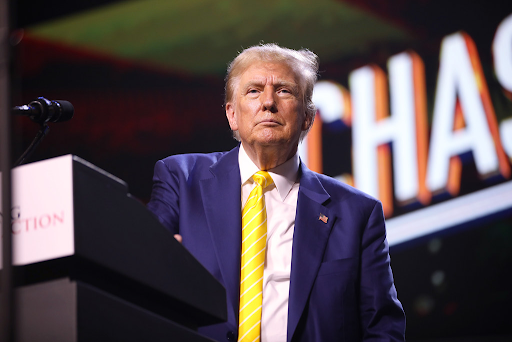
Picture Credit: www.flickr.com
2