
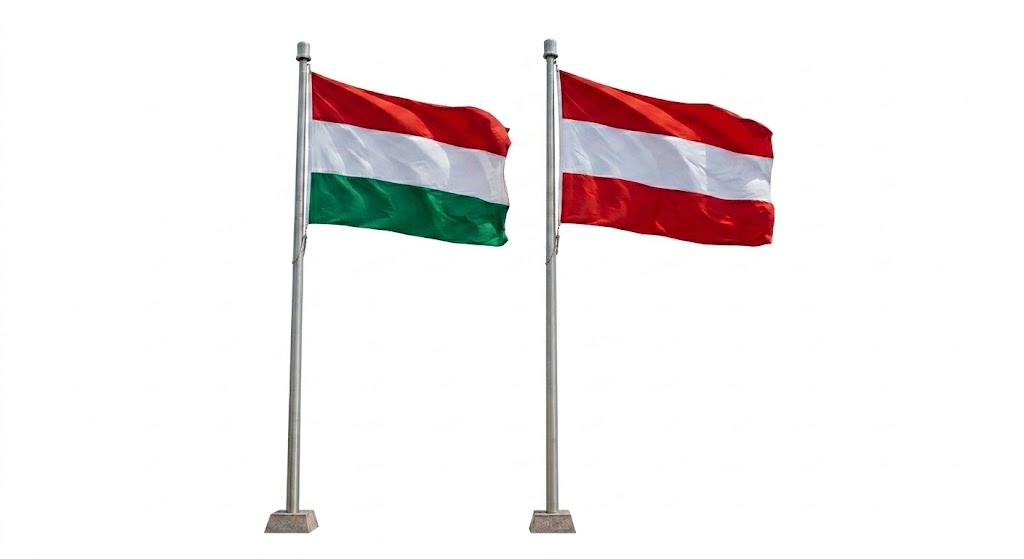
On Thursday, Vienna played host to Hungarian Prime Minister Péter Magyar, who was welcomed by Austrian Chancellor Christian Stocker. This meeting marked a significant step as both nations expressed intentions to enhance cooperation and mend bilateral ties. Magyar, on his second official foreign mission since assuming office, engaged with Austrian leaders, business figures, and regional authorities. Accompanying him were senior ministers focusing on areas such as foreign affairs, the economy, transportation, and environmental policy.
As they addressed the media, Magyar highlighted Hungary’s commitment to becoming a more proactive participant in the European Union while safeguarding its national interests. He underscored the necessity of collaboration within European institutions and regional alliances. Chancellor Stocker lauded Magyar’s election as symbolically crucial and noted that a closer partnership between Austria and Hungary could amplify Central Europe’s sway in the EU.
The leaders agreed to convene a joint cabinet session in September in Gödöllő, Hungary, aiming to bolster their political and economic collaboration. Further, Magyar unveiled plans for a regional summit involving the Visegrád Group nations, with potential invitations extended to neighboring countries such as Austria, Croatia, Romania, and Slovenia.
Key topics during their discussions included migration, energy policy, and regional security. Both governments advocated for enhanced border management cooperation and supported the accelerated expansion of the European Union into the Western Balkans. In the realm of energy, Austria and Hungary emphasized the need for expanded cross-border infrastructure and diversified supply networks. They also deliberated on major transportation projects, such as upgrading rail links between Budapest and Vienna and extending road connections to Austria.
Economic relations took center stage, particularly the issue of Hungary’s special taxes impacting Austrian businesses. Magyar acknowledged the challenges posed by Hungary’s budget constraints and expressed a desire to foster a more transparent and growth-oriented economic framework, encouraging higher-value foreign investments. Environmental concerns, specifically regarding asbestos-contaminated stone shipments from Austrian quarries to western Hungary, were also prominent in the talks. In response, Magyar announced the formation of a joint Austrian-Hungarian commission to investigate and manage cleanup efforts. Chancellor Stocker voiced his support for addressing Hungary’s concerns, pledging cooperation from Austrian agencies.