
The global economy is witnessing an investment spree of historic proportions, with a projected $3 trillion being funneled into building AI datacenters by 2028. These vast warehouses are not just buildings; they are the essential infrastructure, the “central nervous system” underpinning AI tools like ChatGPT and Google’s Veo 3 that are reshaping industries.
The market’s faith in this AI-driven future is reflected in staggering valuations. Nvidia, the chipmaker at the heart of the boom, became the first $5tn company. Microsoft and Apple have both hit $4tn, and OpenAI is eyeing a $1tn flotation. This optimism isn’t just in boardrooms; it’s transforming communities. In Newport, Wales, a new Microsoft datacenter on the site of a former factory is seen as a chance to “embrace the future,” creating generational employment opportunities.
This transformation is powered by massive capital expenditure. The tech industry’s four biggest players—Amazon, Meta, Google, and Microsoft—are expected to spend over $750bn in the next two years alone on the datacenters, chips, and servers needed to meet exponential demand.
This incredible spending is fueling massive, specialized projects. The Stargate venture, a $500bn joint venture between OpenAI, Oracle, and SoftBank, aims to build a network of AI datacenters. Elon Musk’s xAI is building the “colossus” project in Tennessee, while Microsoft is constructing the world’s most powerful AI datacenter in Wisconsin.
While some raise concerns about a bubble, industry leaders argue this infrastructure is a general-purpose technology. As Microsoft points out, these datacenters also power the everyday cloud services we rely on, from email to Zoom calls. The belief is that with 800 million weekly active users on ChatGPT alone, the demand will justify the historic investment.
Forging the Future: Inside the $3 Trillion Bet on AI’s “Central Nervous System”
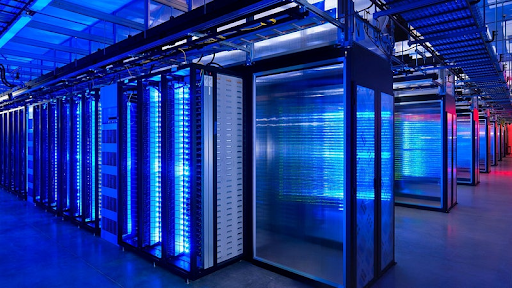
Picture Credit: www.rawpixel.com
47