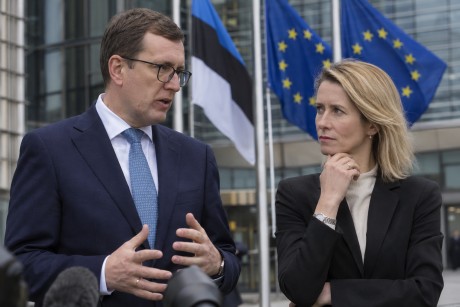
Amid ongoing efforts to resolve the Russia-Ukraine conflict, Estonian Prime Minister Kristen Michal has voiced strong support for European Union foreign policy chief Kaja Kallas as a key figure in peace negotiations. Speaking before a European leaders’ summit in Dublin, Michal emphasized that Russian President Vladimir Putin should not influence Europe’s choice of negotiators, underscoring that existing EU leaders like Kallas and European Council President António Costa are well-equipped to represent the bloc.
Michal’s remarks come as some European governments express skepticism about Kallas’s suitability for direct talks with Putin, given her outspoken criticism of Moscow and advocacy for stringent sanctions against Russia. Despite these concerns, Michal argues that Europe’s negotiators should be accountable to EU member states, rather than be selected based on acceptance by Moscow.
Ukrainian President Volodymyr Zelensky has also highlighted the importance of European involvement in the peace process. He urged European leaders to appoint representatives by the end of November, arguing that discussions impacting European security should not exclude the continent’s direct participation.
The debate highlights a broader division among European leaders regarding the negotiation framework. While some suggest appointing a new EU peace envoy with direct diplomatic access to Moscow, others, like Michal, maintain that current EU institutions and leaders are sufficient for handling negotiations. The core issue remains whether the peace talks should be managed through existing structures or require a distinct representative.
Michal further insisted that any peace agreement must focus on a fair and lasting resolution between Ukraine and Russia, rather than allowing Moscow to shape Europe’s broader security dynamics. This perspective aligns with ongoing efforts to ensure that Europe plays a central role in shaping the outcome of the negotiations.