
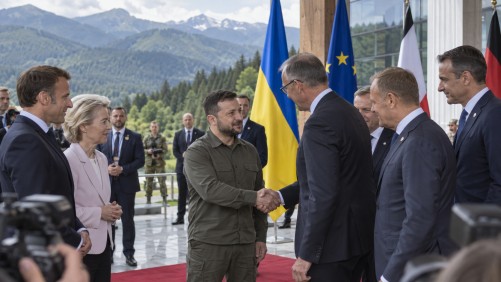
In an effort to bolster regional cooperation amidst ongoing challenges, Ukraine has initiated a new forum aimed at strengthening ties with neighboring countries. The inaugural Carpathian 8 Summit, hosted by Ukrainian President Volodymyr Zelensky, took place from September 18 to 20 in Ivano-Frankivsk Oblast, located in western Ukraine. This three-day event highlighted key areas of collaboration including security, energy, transport, logistics, and economic partnerships among eight nations.
This summit drew leaders and officials from Ukraine, Poland, Romania, Serbia, Czechia, Hungary, Slovakia, and Austria, marking a significant step in regional diplomacy. Notable attendees included Polish Prime Minister Donald Tusk, Romanian President Nicusor Dan, and Serbian President Aleksandar Vucic, while Slovakia was represented by a senior official from its foreign ministry. The gathering underscored the importance of regional solidarity, especially in light of Ukraine’s ongoing conflict and its aspirations towards European integration.
One of the summit’s focal points was economic cooperation, as it brought together approximately 500 business representatives. President Zelensky announced that investment agreements and projects valued over €1 billion were in the pipeline. Nearly 100 projects from the participating countries were showcased, reflecting a robust interest in expanding trade and investment in the Carpathian region.
Beyond economic matters, discussions at the summit also centered on enhancing transport and energy infrastructure, which are seen as crucial for improving regional mobility. The emphasis on these sectors aligns with broader goals to fortify the region’s connectivity and resilience in the face of geopolitical pressures. Poland, a key ally of Ukraine, reiterated its commitment to supporting Ukrainian efforts and emphasized the strategic importance of such regional cooperation initiatives.
The Carpathian 8 Summit is expected to pave the way for more integrated efforts among these nations, fostering a collaborative environment to address shared challenges. It also serves as a platform for dialogue with countries that hold diverse views on military assistance to Ukraine, further highlighting the complexity and necessity of regional diplomacy in today’s geopolitical landscape.